Get Support
123-456-789-10
Common Construction Mistakes and How to Avoid Them.
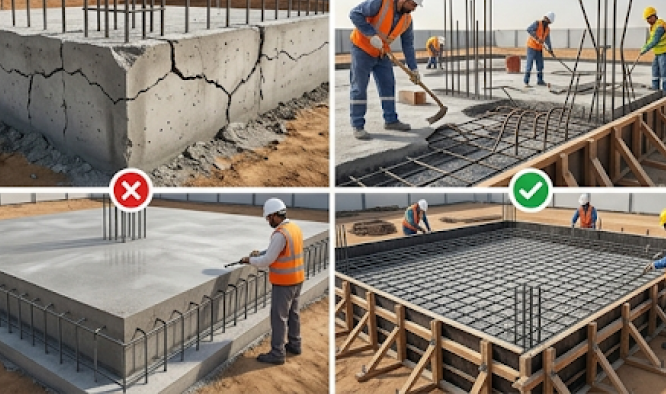
Many project owners fall into common construction mistakes that may lead to higher costs, delayed execution, poor finishing quality, or structural and technical problems after moving in or operating the property. These mistakes are often not caused by a limited budget only, but also by weak planning, choosing the wrong contractor, unclear contracts, or rushing decisions during the construction stages.
Avoiding construction mistakes starts with studying the project carefully before execution, choosing a reliable contractor, reviewing drawings, setting a clear budget, paying attention to material quality, and maintaining continuous supervision. Every decision made during construction affects the final result, so understanding common mistakes helps you execute your project in a safer, more organized, and higher-quality way.
Main Topics in This Article
- Starting construction without a clear project study
- Choosing a contractor based on price only
- Not reviewing drawings before execution
- Poor budget planning and emergency expenses
- Using low-quality construction materials
- Ignoring soil testing and site preparation
- Weak engineering supervision during execution
- Mistakes in plumbing, electrical, and insulation works
- Continuous modifications during construction stages
- Not documenting agreements and changes with the contractor
- Rushing the finishing stage and material selection
- How to avoid construction mistakes and ensure better execution
1- Starting construction without a clear project study
One of the most common construction mistakes is starting execution without studying the details properly, such as the area, land nature, number of floors, finishing level, expected budget, and suitable timeline. This rush may lead to inaccurate decisions that appear during execution.
A prior study helps define the work volume, organize stages, set priorities, and expect both main and additional expenses. Therefore, construction should not start before having a clear project vision, approved drawings, and an executable plan.
- Define your needs: before starting design or execution.
- Review the spaces: and make sure they suit daily use.
- Set an initial budget: including structural works, finishing, and additional expenses.
- Start with a clear plan: instead of making decisions only during execution.
2- Choosing a contractor based on price only
Choosing a contractor based only on the lowest price is one of the mistakes that can cause major problems in a construction project. A low price may be suitable if the offer is clear and complete, but it may also hide missing items, lower-quality materials, or weak supervision and follow-up.
The correct comparison between contractors should depend on experience, previous work, offer clarity, material quality, payment method, execution duration, and supervision level. The cost of correcting mistakes later may be much higher than the price difference between one offer and another.
- Do not look at price alone: review items, materials, and experience.
- Request a detailed quotation: that clearly explains what the price includes.
- Review previous work: before contracting with any contractor.
- Compare after unifying items: so the comparison is fair.
3- Not reviewing drawings before execution
One important construction mistake is executing the project without carefully reviewing architectural, structural, electrical, and mechanical drawings. Drawings may include details that need modification or coordination before execution. If discovered during work, they may lead to demolition, rework, or increased costs.
You should make sure the drawings match the project owner’s needs, and that the distribution of rooms, bathrooms, entrances, windows, electrical points, and plumbing points is suitable for daily use. Drawings should also be reviewed with a specialist before actual execution starts.
- Review room distribution and spaces before starting.
- Make sure architectural and structural drawings are coordinated.
- Review electrical, plumbing, and air conditioning locations early.
- Approve modifications before execution, not after it.
4- Poor budget planning and emergency expenses
Poor financial planning is one of the main reasons construction projects stop or get delayed. A project owner may set a budget for structural works or finishing only and forget additional expenses such as permits, drawings, transportation, waste removal, accessories, modifications, or differences in material prices.
Therefore, a comprehensive budget should include all stages, with an emergency margin so the project does not stop when unexpected expenses appear. It is also better to link payments to completed stages, not time only, so budget management becomes clearer.
Important note: Having an emergency financial margin does not mean randomly increasing the budget. It is a preventive step that helps you handle any changes or notes during execution without delaying the project.
5- Using low-quality construction materials
Using low-quality materials is one of the most serious construction mistakes. It may reduce the cost at the beginning, but it increases maintenance and repair costs later. Essential materials such as steel, concrete, insulation, plumbing, electricity, and exterior paints directly affect the building’s strength, safety, and lifespan.
Saving should be smart by choosing materials that suit the budget without compromising essential elements. Cost can be reduced in some decorative details, but random saving in foundations, installations, or insulation is not recommended.
- Structural materials: their quality should not be compromised because they are the building’s foundation.
- Insulation: protects from moisture, leaks, and future problems.
- Plumbing and electricity: require reliable materials and accurate execution.
- Finishing materials: choose them according to use, not appearance only.
6- Ignoring soil testing and site preparation
Ignoring soil testing or site preparation before construction may lead to structural problems or unexpected cost increases. Soil nature determines the required foundation type, excavation depth, backfilling works, or treatment that the site may need before execution starts.
The site should also be clean, accessible for equipment, free from debris or old buildings, and properly leveled. Good site preparation helps ensure faster and safer execution and reduces unexpected stoppages during work.
- Conduct soil testing before designing foundations.
- Prepare and clean the site before equipment enters.
- Calculate excavation and backfilling within the budget.
- Make sure equipment and materials can reach the site easily.
7- Weak engineering supervision during execution
Weak engineering supervision is one of the mistakes that may affect the quality of the entire project. Having workers and a contractor is not enough, because the project needs technical follow-up to ensure execution is done according to drawings and specifications, and that the materials used match what was agreed upon.
Good supervision helps detect mistakes early, review work stages before moving to the next stage, and control the quality of structural works, finishing, and installations. The stronger the follow-up, the lower the chances of rework or post-handover problems.
Continuous supervision
Helps review execution at every stage and prevents mistakes from accumulating until the end of the project.
Better quality
Technical follow-up ensures commitment to drawings and preserves material quality and execution method.
8- Mistakes in plumbing, electrical, and insulation works
Plumbing, electrical, and insulation works may not be clearly visible after finishing, but they are among the most important items in building quality. Any mistake in them may lead to leaks, electrical faults, poor performance, or the need for breaking and repair after moving in.
Therefore, these works should be executed with good materials and specialized technicians, while testing plumbing and insulation before closing walls or installing final finishes. Electrical and plumbing distribution should also be based on the actual use of the space, not randomly or without planning.
- Plumbing test: before installing flooring or closing walls.
- Insulation test: especially in bathrooms, roofs, and kitchens.
- Electrical distribution: according to furniture and daily use.
- Documenting installations: with photos before closing them helps with future maintenance.
9- Continuous modifications during construction stages
Continuous modifications during construction are among the most common reasons for higher costs and delayed handover. The project owner may decide to change a room layout, move a door, modify a bathroom, change the kitchen location, or add new details after execution starts, which may lead to demolition or rework.
To avoid this problem, drawings should be reviewed and main decisions should be made before starting, especially regarding space distribution, electrical and plumbing locations, and door and window positions. If a modification is needed, its impact on cost and time should be studied before execution.
- Approve final drawings before starting execution.
- Reduce modifications during work as much as possible.
- Ask about the cost of any modification before executing it.
- Document changes to avoid disputes later.
10- Not documenting agreements and changes with the contractor
Not documenting agreements is one of the mistakes that may cause major disputes between the project owner and the contractor. Verbal agreements may not be enough when there is disagreement about cost, execution duration, material type, or included and excluded items.
The contract should be clear and detailed, including the scope of work, materials, duration, payments, how modifications are handled, and each party’s responsibilities. Any change or addition during execution should also be documented before starting it, so everything remains clear for everyone.
- Clear contract: defines scope of work, cost, and duration.
- Written specifications: clarify material type and execution level.
- Payments linked to progress: reduce disputes during work.
- Documenting modifications: before executing any new change.
11- Rushing the finishing stage and material selection
The finishing stage requires careful decisions because choosing flooring, paints, doors, lighting, sanitary fixtures, kitchens, and facades affects the final appearance, cost, and ease of maintenance. Rushing material selection may lead to inconsistent results or a higher cost than expected.
Materials should be chosen based on use, quality, budget, and design harmony, not appearance only. It is also better to define the required finishing level from the beginning so choices do not change frequently during execution and affect the budget.
- Choose materials early: so execution is not delayed.
- Balance appearance and quality: because a good material should also be practical.
- Define finishing level: economical, medium, or luxury before starting the stage.
- Pay attention to harmony: between flooring, walls, doors, and lighting.
12- How to avoid construction mistakes and ensure better execution
Avoiding construction mistakes starts with good planning, reviewing drawings, choosing a reliable contractor, documenting agreements, paying attention to material quality, and continuous follow-up during execution. Every stage needs clear decisions and careful review so mistakes do not accumulate and appear later at a higher cost.
Working with a specialized construction or supervision team also helps you organize the project, compare offers, monitor execution quality, and reduce unexpected expenses. Therefore, treating construction as an integrated process of planning, execution, and supervision is the best way to achieve a safe and successful result.
Clear planning
Defining the budget, drawings, and stages before execution reduces random decisions and makes the project more organized.
Professional supervision and execution
Good follow-up during construction stages helps detect mistakes early and improve the quality of the final result.
Do you want to execute your project without costly mistakes?
Contact us now to discuss your project details, review execution stages, and avoid common construction mistakes through a clear plan and organized supervision that helps you achieve a safer result and better quality.